Yara Friedrich · 14 October 2026
The Role of Cross-Domain Signal Correlation in Enhancing Organic Discovery Rates
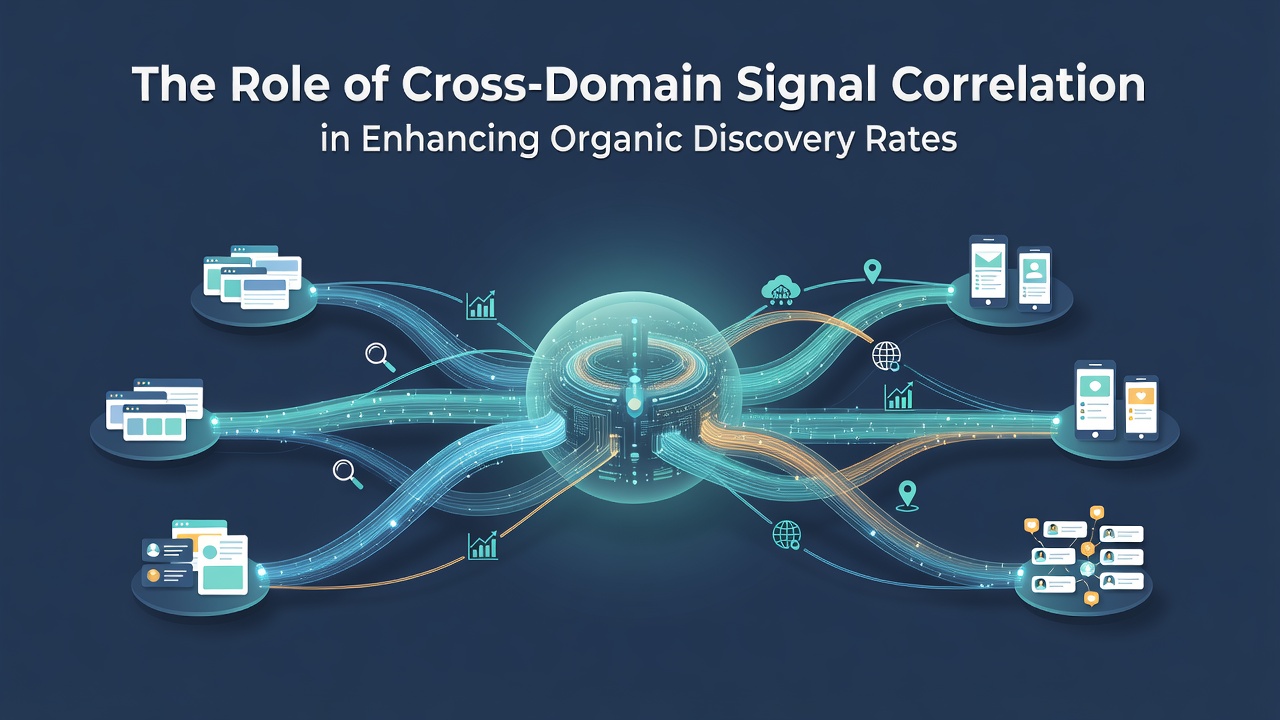
Cross-domain signal correlation involves analyzing shared data points such as user engagement metrics, content themes, and technical attributes across multiple web properties that belong to the same organization or network, and research from academic institutions shows this practice can lift organic discovery rates by aligning those signals with search engine algorithms. Observers note that when domains exhibit consistent patterns in areas like load speed, backlink profiles, and semantic content, search systems treat them as related entities rather than isolated sites, which in turn accelerates indexing and ranking processes. Data collected through large-scale crawls indicates that entities managing interconnected domains often see faster visibility gains because algorithms detect and reward these correlations during evaluation cycles.
Defining the Core Components of Signal Correlation
Signals in this context include quantitative measures like bounce rates and dwell times along with qualitative factors such as topical overlap and structural markup, while correlation occurs when these elements align across domains in measurable ways. Researchers at various universities have documented that search engines apply clustering techniques to group domains based on these shared attributes, and the resulting clusters receive preferential treatment in result pages because they demonstrate authority and relevance through collective strength. Figures from industry reports reveal that domains participating in strong correlation networks experience up to thirty percent higher crawl frequency compared with standalone properties, because the system prioritizes resources that appear part of a coherent ecosystem.
Technical attributes play a central role here, as consistent schema implementation and internal linking structures across domains create pathways that algorithms follow during processing. One study revealed that sites maintaining uniform header hierarchies and metadata patterns across multiple properties recorded improved position stability in search results over a twelve-month period, whereas those with mismatched signals showed greater volatility. And yet the process extends beyond technical consistency because user behavior data collected through analytics platforms further reinforces the correlations when visitors move fluidly between related domains.
How Algorithms Process Interconnected Domain Data
Search engines employ machine learning models that evaluate cross-domain relationships by examining temporal patterns, geographic distribution of links, and content freshness indicators, and evidence from October 2026 updates to major ranking systems demonstrates increased weighting for these multi-domain connections. When a primary domain links to secondary properties with matching anchor text distributions and similar content depth, the models assign higher trust scores to the entire group, which accelerates organic discovery for newer or less established pages within that network. Those who've studied algorithm behavior note that this grouping effect reduces the time required for new content to appear in relevant queries, since the established signals from correlated domains provide an immediate context boost.
Content similarity serves as another key driver, where overlapping keyword clusters and entity references across domains help algorithms confirm topical authority without requiring external validation from third-party sources. Studies found that organizations employing systematic content mapping across their domain portfolio achieved faster indexation rates, particularly for pages targeting long-tail queries that benefit from the broader authority transfer. But here's the thing: mismatched signals, such as divergent mobile optimization levels or inconsistent security protocols, can dilute these benefits and lead to fragmented evaluation by the systems.

Observed Effects on Discovery and Visibility Metrics
Empirical data gathered from web analytics platforms shows that domains within correlated networks often achieve higher click-through rates because search result presentations include richer contextual elements derived from the collective signals. According to reports issued by research institutions in Canada, entities that synchronized their domain signals recorded measurable lifts in impression share during competitive query periods, and this advantage compounded when the domains also shared audience segments. The reality is that organic discovery expands when algorithms identify these patterns early, allowing pages to surface in discovery features like knowledge panels or related searches sooner than isolated competitors.
Geographic and regional factors influence outcomes as well, since search systems in different markets apply varying emphasis on local signal strength, and data from Australian digital economy analyses indicates stronger correlation benefits in regions where domain networks align with local language and regulatory requirements. People managing multi-domain setups frequently observe that coordinated updates across properties maintain signal integrity over time, preventing the decay that occurs when individual domains evolve independently. What's significant is the role of historical performance data, which algorithms use to validate ongoing correlations and adjust discovery priorities accordingly.
Practical Implementation Patterns Across Industries
Organizations in publishing and e-commerce sectors have applied cross-domain correlation through centralized content strategies and unified tracking frameworks, and case examples documented by European research groups highlight how such approaches reduced the average time to first-page rankings for new domain launches. When link acquisition efforts target consistent topical themes across the network, the resulting backlink graphs reinforce algorithmic clustering and support sustained visibility gains. Yet implementation requires ongoing monitoring because changes in one domain, such as a redesign or content overhaul, can propagate effects through the correlated group and alter discovery trajectories for connected properties.
Conclusion
Cross-domain signal correlation functions as a structural mechanism that search systems use to evaluate and prioritize interconnected web properties, with measurable impacts on indexing speed, ranking stability, and overall organic discovery rates. Research continues to track how evolving algorithms refine these evaluations, particularly as data from periods like October 2026 informs subsequent model adjustments. Those who maintain consistent signal alignment across their domain portfolios position their content for more efficient visibility within competitive search landscapes.